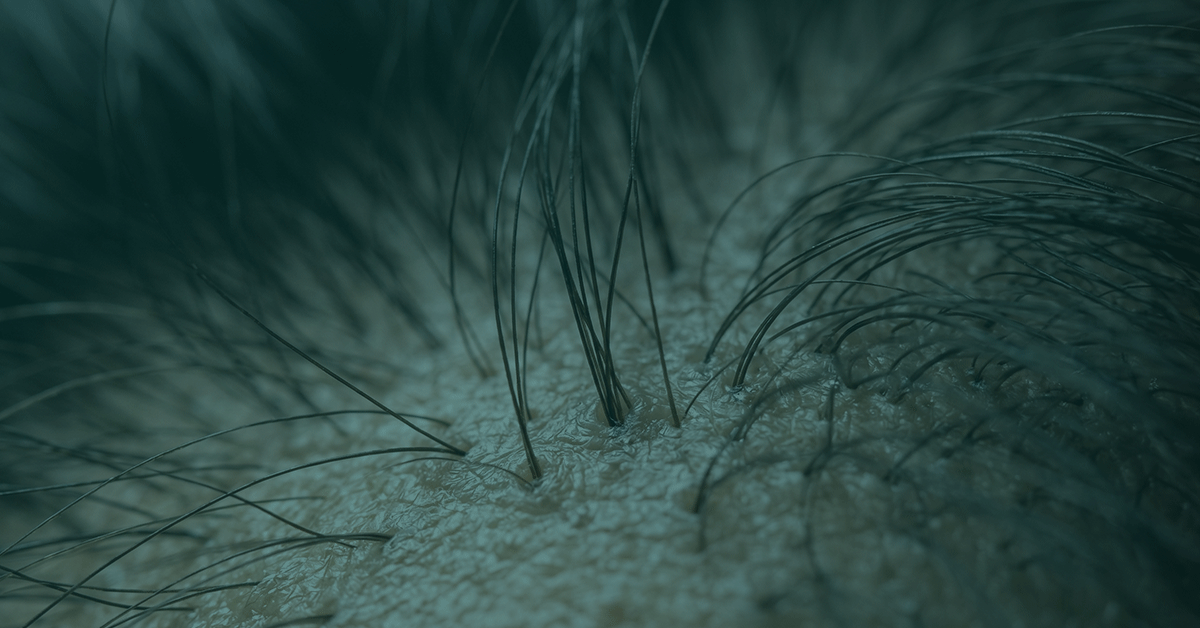
In order to understand hair loss, you need to understand the scalp. People often mistake the scalp as just “skin at the top of the head.” But there is more to it than just that and it is where the most concerning hair loss occurs.
What Part of the Head Is the Scalp?
The scalp is composed of layers of soft tissue that cover the cranium. These tissues cover an anatomic region bordered on the anterior by the face, and laterally and posteriorly by the neck. It serves as a barrier defending the body from foreign irritations and is also the area where hair grows.
How Do I Know My Scalp Type?
There are signs you can look for to determine your probable scalp type, but nothing substitutes for a professional diagnosis.
Dry Scalps are usually itchy or irritated and often show flecks of dried skin. Oily scalps often seem noticeably greasy despite washing. People who use a lot of products in their hair can sometimes seem to have an oily scalp when in fact it is a buildup of product.
Why Is My Scalp Oily But My Hair Dry?
Hair type usually has a genetic basis, but there are numerous factors that can produce an oily scalp and dry, brittle ends.
- Bleaching or color treatments
- Hair type
- Over washing
- Inappropriate hair products
- Weather
How Is Hair Attached to the Scalp?
The anatomy of hair is comparatively simple. Each hair is composed of a shaft, the visible part of the hair, and a root that extends into the deeper tissues of the scalp. This root is encased in a follicle, a sheath composed of connective tissue and skin, as well as a sebaceous gland.
Each follicle is attached to a variety of nerves, and a muscle called the arrector pili. This muscle can make the hair stand up, while the nerves sense movement of the hair and can be sensitive to the smallest draft. The base of the hair widens out into a bulb containing the hair papilla which supplies blood flow and nutrients to the hair. It is here that new hair cells are produced.
What Is the Difference Between Scalp Hair and Body Hair?
There are two types of hair, vellus and terminal. Vellus hairs are found across most of the body and are fine, thin “peach fuzz: type hairs. Terminal hairs are both thicker and darker, appearing on the scalp, chest, armpits and pubic hairs.
Hair Restoration of Lehigh Valley, Your Ally Against Hair Loss
Do not let hair loss win. At Hair Restoration of Lehigh Valley, we have the tools, the experience, and the expertise to help you return to a full and luxurious head of hair. Contact us today for a consultation!


Leave a Reply