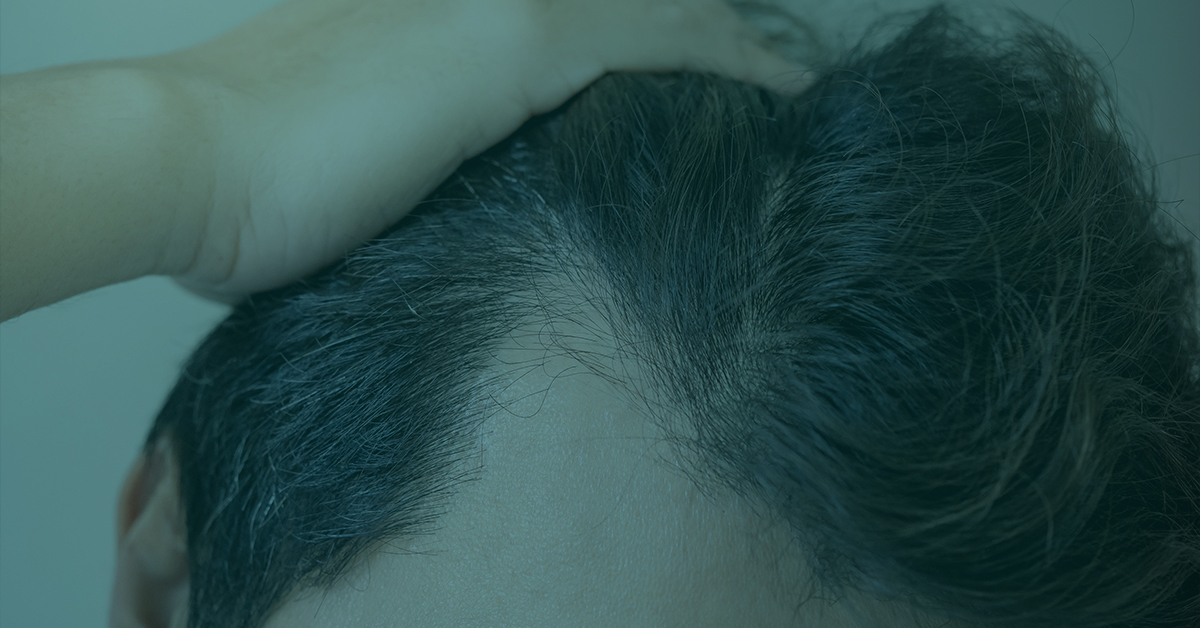
Hair loss and hair shedding may sound like (and sometimes look like!) the same thing, but the latter is completely normal. The other might be a sign that you are balding.
For the average person, knowing the difference between normal hair shedding and true hair loss is not just splitting hairs. It is the difference between continuing confidence and the emotional and physical reality of hair loss.
How Do I Know If My Hair Loss Is Normal?
Hair shedding is perfectly normal. As humans, we lose between 50 and 100 hairs per day. That’s because, as the Cleveland Clinic points out, we have about 100,000 (or more) hair follicles on our heads. With each hair follicle capable of producing more than one hair, losing 100 hairs a day is no big deal.
In fact, that is only about 3,000 a month or about one percent of the total hairs on the average person’s head. But most of us also have no idea what 100 hairs per day looks like, and we certainly are not plucking them out of the shower drain to count them.
And you do not have to, either. There are some easy clues to tell you that your shedding has moved on to actual hair loss. Alopecia, the medical term for hair loss, is fairly common as we age. In fact, the most common form of hair loss is age-related genetic hair loss which affects about 80 million Americans – or one in every five people.
Common Forms of Hair Loss
Androgenic Alopecia, commonly referred to as male or female pattern baldness, is a genetic condition and the longer you live the more likely you are to suffer from it. Of course, if you inherit a genetic tendency toward it from one or both of your parents, you may start seeing it as early as your mid-20s in men or any time past puberty in women.
This type of hair loss usually includes a receding hairline and bald spot near the crown of the head for men and all over thinning of the hair for women.
Telogen Effluvium is another common form of hair loss. This type of hair loss may not lead to balding but can be frightening and is often indicative of emotional or physical stressors causing hair loss. The Mayo Clinic says, “Handfuls of hair may come out when combing or washing your hair or even after gentle tugging. This type of hair loss usually causes overall hair thinning but is temporary.” This type of hair loss was common after COVID-19, an emotional stress, or psychological stress.
Anagen Effluvium is hair loss due to a medical treatment like chemotherapy. Most people are not surprised or question the hair loss when this is the reason.
Alopecia Areata is an autoimmune condition that makes your hair fall out in patches. This condition is not usually painful, though many people find it very stressful. Alopecia areata can sometimes be treated with medications that help hair regrow.
Traction Alopecia is hair loss due to pulling. This does not happen when someone gives your hair a playful tug, but when a hairstyle – like extremely tight buns or braids – constantly pull at the root bulbs in the hair follicle, damaging it. Some hairstyles and hair covering can actually cause your hair to break or fall out.
While these are five of the most common types of hair loss, there are many more including those caused by poor nutrition or diseases in other parts of the body – such as thyroid disease.
How Do I Know What Type of Hair Loss I Have?
When identifying the types of hair loss a person has, doctors look at medical history, family history and the pattern of hair loss. Almost every form of alopecia has a different appearance. Alopecia areata has patches while androgenic alopecia seems more like a thinning of the hair.
But the best way to determine what type of hair loss you are experiencing, and what can be done about it, is to contact an expert.
To identify your hair loss type, call the experts at Hair Restoration of Lehigh Valley.
Our helpful staff here at Hair Restoration of Lehigh Valley are ready to talk with you and determine exactly what is causing your hair loss. We can also help you decide what to do about it. Call us today for your free consultation.


[…] effluvium is a form of temporary hair loss that typically happens when a person has experienced extreme stress, shock, or some traumatic […]