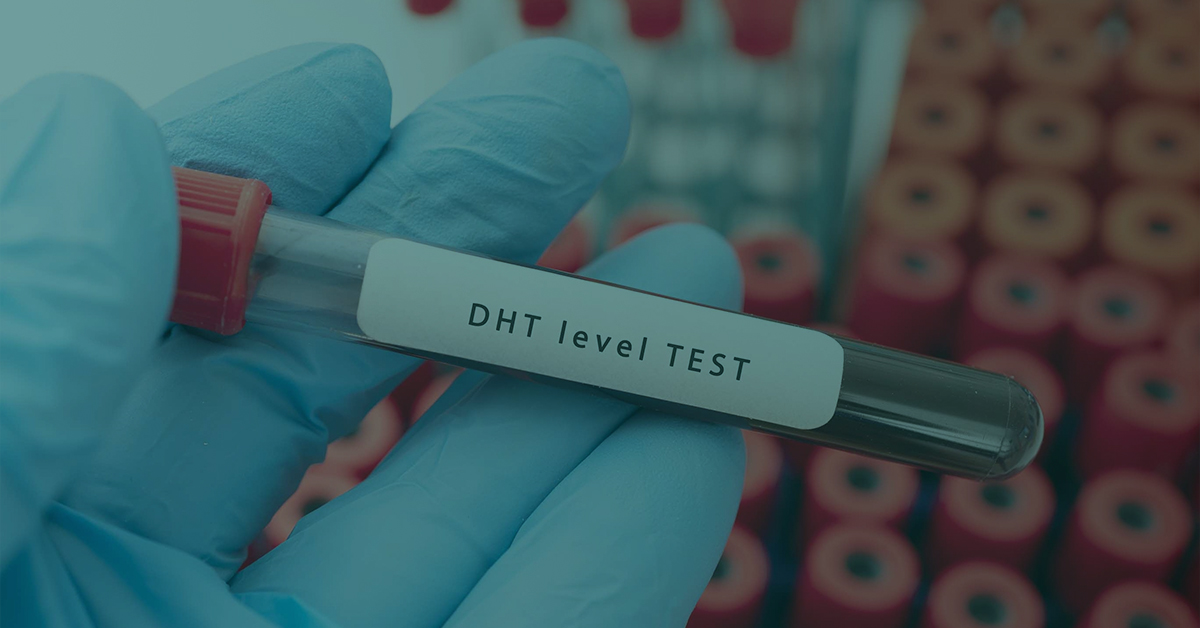
Dihydrotestosterone (DHT) is a more potent derivative of regular testosterone. This particular derivative is what drives the expression of male physical sex traits – including deepening of the voice and hair growth.
Roughly half the population, no matter their gender, will undergo hair loss at one point or another in their lives. Most of these cases are androgenetic alopecia or related types of hair loss. It is commonly thought that sex hormones such as DHT are one of the largest contributing factors to male pattern hair loss.
What Does DHT Do to Your Hair?
When DHT levels are in balance, it does not have much effect outside of puberty. DHT is an essential element of male puberty. It is the primary androgen driving the growth of facial hair, body hair, and public hair. It has only minimal effect on hair growth or loss unless there is an excess of it… which is when hair loss issues begin.
What Happens If DHT Is Too High?
Excess DHT can shrink the follicles on the scalp, disrupting their growth cycle. Specifically, it causes follicle shrinkage which leads to shortening of the resting phase of the growth cycle and impairing new hair growth.
DHT levels naturally escalate with age, increasing the likelihood of facing this sort of hair loss. Normally 10% of testosterone in an adult male gets converted into DHT through enzymatic reaction. This increase in DHT levels by aging is a primary reason hair loss becomes more common with age.
What Causes DHT to Increase?
The more testosterone the body produces, the more DHT is created. Additionally, there are numerous health factors that can also drive this increase, particularly those that impact hormone levels. Adrenal issues, prostate problems, PCOS, and others can all drive an increase in DHT as can some medications.
What Are the Signs of High DHT?
In men, high DHT symptoms often include alopecia areata (male pattern baldness), acne, and in extreme cases it has been found to be associated with prostate cancer. Excess DHT in women often presents with symptoms like hirsutism, acne, disruption of the menstrual cycle, and depression.
Can You Remove DHT from the Scalp?
Most DHT in the scalp is in sebum, a mix of oils secreted by the scalp which blocks pores and shrink the follicles impeding hair growth. Proper shampooing can help reduce the amount of sebum, and using a DHT blocker can help reduce its levels. Dietary changes and lifestyle changes, (physical exercise, quitting smoking, minimizing stress levels) are anecdotally linked to reducing DHT levels.
Hair Restoration of Lehigh Valley, Your Number One Resource in the Battle Against Hair Loss
Whether you suspect your hair loss is DHT driven or from another cause, our team has a proven track record in treating all types of hair loss. Contact us today for a consultation and let us get you on track to a more satisfying and natural look!


[…] for instance… it is a vital building block of hair but in excess it can cause the production of DHT and trigger hair […]