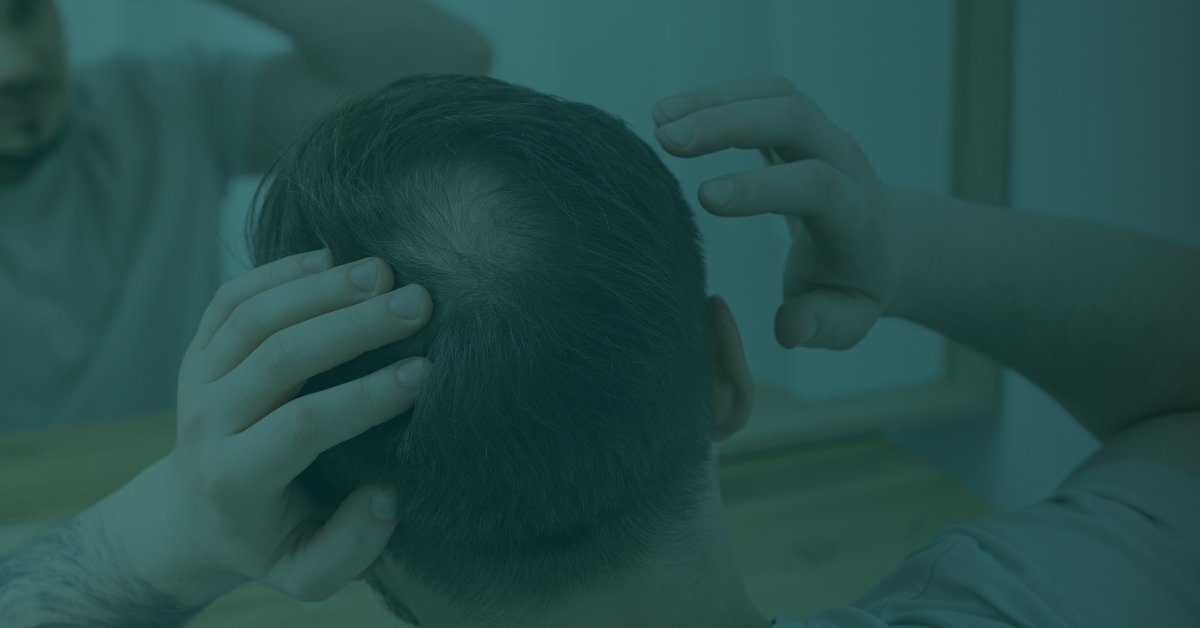
Most of us will experience hair loss at some point in our lifetime. Approximately 80 percent of men and nearly half of all women lose a significant amount of hair, typically as a result of genetics and aging.
While those are the most common hair loss causes, there are many others. These include stress, autoimmune issues, certain behaviors/habits, and hair styling practices. To choose the best treatment for hair loss, it is first necessary to determine its underlying cause.
What Are the Common Types of Hair Loss?
The most common hair loss causes include:
- Androgenic alopecia, also known as male pattern baldness, is characterized by a distinctive M-shaped receding hairline, sometimes accompanied by an expanding balding spot at the crown of the head. In women, it is known as female pattern baldness and presents as overall thinning of the hair and a widening part. It is genetic and hormonal in nature and tends to worsen with age. Androgenic alopecia is progressive, but it can be slowed down with treatment. Hair that has already been lost is gone permanently, particularly in men. It can only be reversed with hair replacement.
- Telogen effluvium is all-over hair thinning that occurs when physical or emotional stress disrupts the hair’s growth cycle. It leads to excessive shedding and inhibited regrowth. Telogen effluvium may occur months after a stressful event. Typically, it is not permanent, and hair should begin growing back several months after the stressor is removed.
- Alopecia areata is characterized by round, patchy balding spots. It occurs when hair follicles are attacked by the immune system. It is often treatable with non-surgical options, and hair may regrow when the underlying health issue is resolved.
- Scarring alopecia is when an accident, injury, or autoimmune issue destroys all or some of the hair follicles. This can include infections, chemical spills, burns, or infections. Scarring alopecia is permanent, and hair will not grow back on its own.
- Traction alopecia is patches of hair loss caused by wearing severe hairstyles (or headgear) that pull on the follicles. If the individual gives their hair and scalp a break, hair may regrow. If not, hair loss in the impacted area of the scalp may become permanent and require surgical intervention.
How Do I Know What Type of Hair Loss I Have?
The best, most reliable way to determine the type and underlying cause of your hair loss is to consult a qualified physician. A doctor who specializes in hair loss will inquire about your health and family history, stressors, and conduct a comprehensive assessment of your hair and scalp. They may perform a variety of tests (such as a pull test) or order additional diagnostics.
In some cases, you may be able to make an educated guess on your own… especially if your hair loss is occurring in a specific pattern. An M-shaped receding hairline is typically an indicator of androgenic alopecia, while round patches of hair loss are a primary symptom of alopecia areata. Excess shedding across the scalp could be a result of telogen effluvium or female pattern baldness.
What Hair Type Loses the Most Hair?
There are some persistent misconceptions about what type of hair is most prone to hair loss. In reality, all types of hair – both straight and curly, fine and thick – are subject to the same hair loss factors and experience the same levels of shedding.
It may seem that curly hair falls out more, but it does not. In actuality, it is more likely to break because of tangling and aggressive combing. Fine hair can appear significantly thinner after an increase in shedding, but individuals with thick hair shafts lose just as much.
How Do I Know If My Hair Loss Is Normal?
As part of the hair’s normal growth cycle, most individuals shed an average of 50-100 hair strands every day. These hairs are released from the scalp to make way for fresh, healthy growth. When one loses more than 100-150 strands per day, this is excessive shedding and may be a cause for concern. Other red flags are when hair loss is patchy or occurs in a discernible pattern.
Natural Looking, Permanent Results
Hair Restoration of Lehigh Valley offers the most advanced hair restoration technology in the Allentown–Bethlehem–Easton metropolitan area. We offer both ARTAS® and Neograft® robotic-assisted procedures that give natural-looking results with minimal downtime. We take a patient-focused approach and are happy to answer your questions and fully explain your hair restoration options. Call us today to arrange a free, no-obligations consultation. We are here to help you boost your confidence and achieve the hairline you desire.


[…] of us have come to terms with the fact that experiencing some level of hair loss is almost inevitable. Male and female pattern baldness is genetic, and as we age, we are more […]