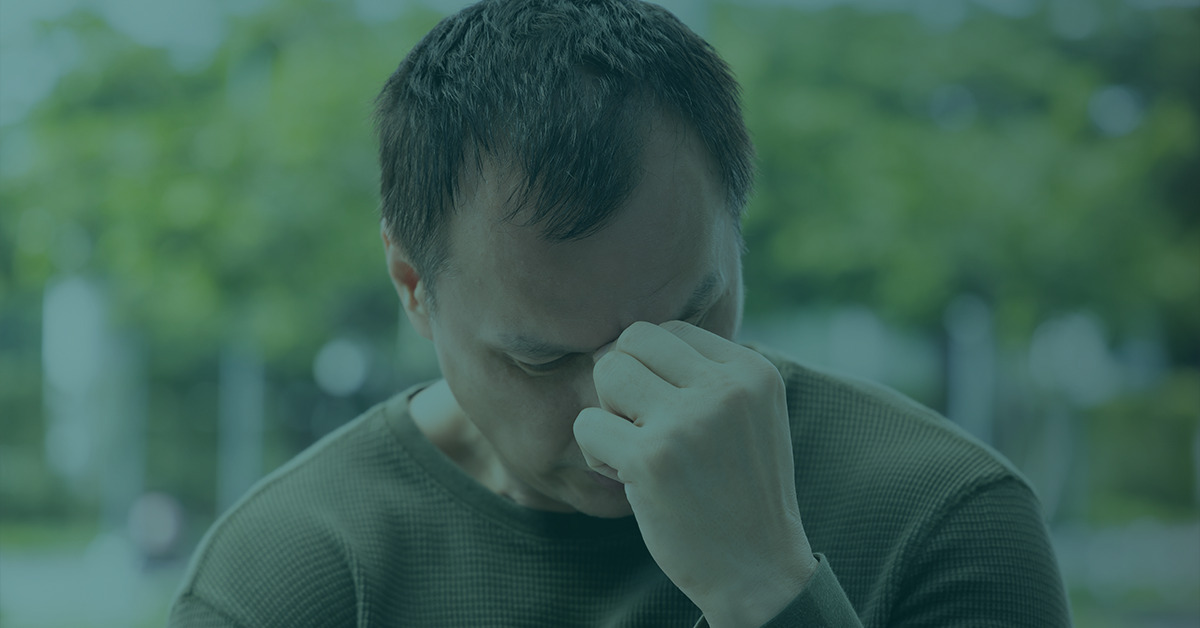
Nearly 80 percent of men will face some form of hair loss during the course of their life. Losing one’s hair is so common it is almost a male rite of passage, but it still can have a devastating mental impact on those who experience it.
A thick, full head of hair is seen as a sign of youth and vitality and, when hair loss occurs, it can affect a man’s confidence, self-esteem, body image, and psychological well-being. Some men even experience shame, anxiety, depression, or social withdrawal that can affect their personal and professional relationships.
Can Your Mental Health Affect Your Hair?
Just as hair loss can affect a man’s mental well-being, his mental health can in turn have an effect on the health of his hair. Mental health conditions such as depression, anxiety, stress, bipolar disorder, OCD, PTSD, and others may lead to profuse shedding or even permanent hair loss. Sometimes, the interplay of mental health and hair loss can even become a vicious cycle that takes a toll on both one’s psyche and one’s scalp.
Can Stress and Anxiety Damage Your Hair?
Stress and anxiety are common causes of hair loss. Both can trigger telogen effluvium, a form of excessive hair shedding. Telogen effluvium occurs when the hair’s growth cycle is disrupted by physical or emotional stressors that push higher-than-normal numbers of hair follicles into their resting phase. More hairs are shed and fewer are growing, which leads to hair that looks thinner and less robust.
Stress and anxiety can also trigger alopecia areata and other types of hair loss where the immune system attacks the hair follicles. Autoimmune hair loss often appears as shiny hairless patches on the scalp or elsewhere on the body.
Additionally, stress, anxiety, and other mental conditions can lead to behaviors that are bad for your hair and scalp. Getting poor or too little sleep, failing to exercise, and not eating properly can all have a negative impact on hair growth. Some individuals even develop a condition called trichotillomania, the nervous habit of pulling on or plucking out hairs on the scalp, face, or elsewhere on the body that can lead to permanent hair loss in the impacted area.
Can Depression Mess With Your Hair?
Depression – much like anxiety and stress – can result in hair loss. It may cause telogen effluvium, trigger autoimmune hair loss, or lead to hair-damaging behaviors. Treatment for depression can also be hard on the hair. SSRI and bupropion medications for depression list excess hair shedding as a potential side effect. Fortunately, depression hair loss may be reversible with a change in medication or when the condition is well-controlled and the body adjusts to medications.
Is Mental Health Hair Loss Permanent?
For many men, mental health-related hair loss is temporary. Once one’s stress, anxiety, or other condition is well-controlled, visible hair regrowth may take place within a matter of months. In the meantime, it is important to maintain a healthy lifestyle, and to create the best possible scalp biome for hair growth.
Maximize Your Hair’s Potential with Us
While you focus on your mental health, Hair Restoration of Lehigh Valley can help maximize your hair’s potential with minimally invasive procedures like platelet-rich plasma treatment, or the Capillus Spectrum MD low-level laser therapy cap. We also offer the most advanced surgical hair restoration technology in the Philadelphia area, including ARTAS® and NeoGraft® robotic-assisted procedures that give natural-looking results with minimal downtime. We take a patient-focused approach and are happy to answer your questions and fully explain your hair restoration options. Contact us today to set up a free, no-obligation consultation.


Leave a Reply