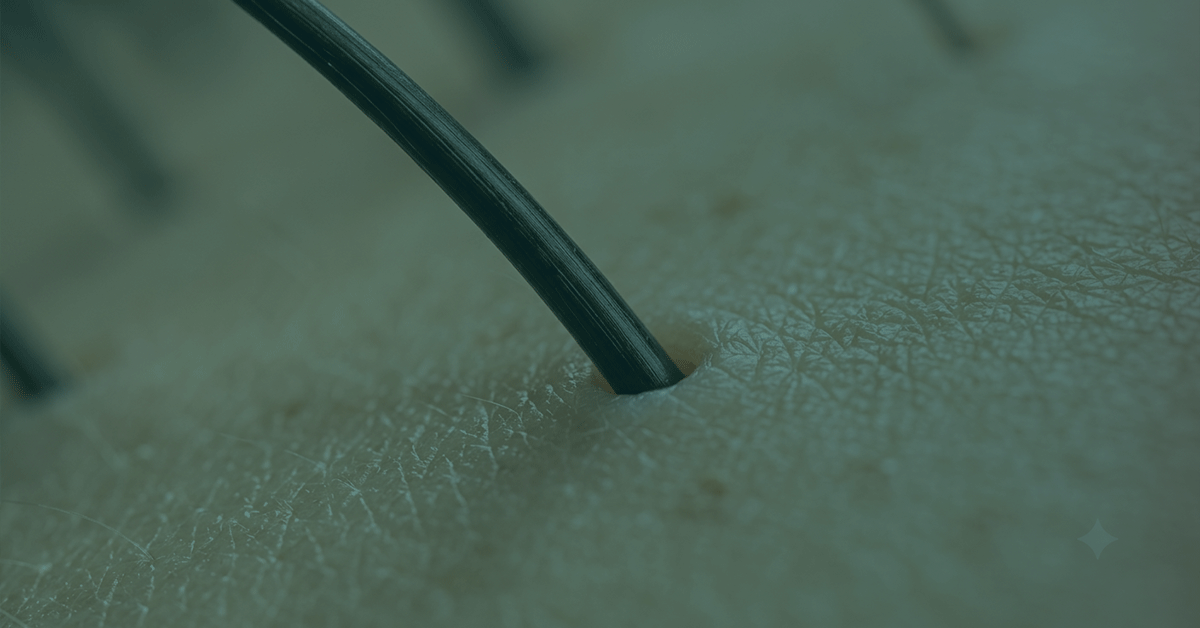
If you have ever pulled a strand of hair loose and noticed a tiny pale bulb at the end, you have already met one of the most quietly remarkable structures in the human body: the hair follicle. Most of us think about hair only in terms of what we can see and style, yet nearly everything that matters — thickness, color, growth, and even hair loss — begins out of sight, in a microscopic pocket of living tissue tucked into the skin.
Understanding hair follicle anatomy is the first step toward understanding your own hair and toward making informed decisions if you ever notice changes in it. The follicle works hand in hand with the layers of the scalp, so it helps to picture the bigger landscape first — our overview of scalp anatomy is a useful companion to this guide. Below, we walk through what a follicle is, what it is made of, how it grows hair, and what happens when follicles change over time.
Table of Contents
What Is a Hair Follicle?
A hair follicle is a small, tube-shaped structure in the outer layers of the skin that anchors and grows a single strand of hair. You have them almost everywhere on your body — the scalp, face, arms, and legs — with the notable exceptions of the palms, the soles of the feet, and the lips. Each follicle is a self-contained unit: it produces the hair, holds it in place, and feeds it while it grows.
A common question is whether a hair follicle is the same as a hair root. They are closely related but not identical. The root is the living portion of the hair strand itself, the part buried beneath the skin’s surface. The follicle is the surrounding structure — the sheath, blood supply, and specialized cells — that houses the root and makes growth possible. Think of the root as the seed and the follicle as the soil, water, and pot all working together. Scientists describe the follicle as one of the few structures that regenerates throughout life, which is part of what makes it so unusual.
Hair Follicle Anatomy: What a Follicle Is Made Of
So, what is a hair follicle made of? Although it is smaller than a grain of rice, the follicle is a layered, highly organized structure. At its base sits the hair bulb, the rounded bottom portion where active growth takes place. Inside the bulb is the dermal papilla, a cluster of connective tissue and blood vessels that deliver oxygen and nutrients to the growing hair.
Surrounding the developing strand are the inner and outer root sheaths, protective layers that guide the hair upward and hold it firmly in place. Just above the bulb sits the matrix cells – some of the most rapidly dividing cells in the entire body. As these cells multiply and harden through a process involving keratin, they form the hair shaft you eventually see. The matrix also contains melanocytes, the pigment-producing cells that give hair its color and that explain why hair gradually turns gray as the cells that produce pigment decline with age.
This brings us to a question many people ask after a strand falls out: what is the white stuff at the end of the hair follicle? That small white or translucent bulb is not the “root dying” and it is not a sign of damage. It is usually a portion of the root sheath — the soft tissue which surrounded the hair while it grew — sometimes along with the keratin-rich base of the strand. Seeing it on a few shed hairs is completely normal because hairs are constantly being released at the end of their natural cycle. A waxy white coating at the base, on the other hand, is typically sebum, the natural oil your scalp produces.
What the Hair Follicle Does
The most obvious hair follicle function is producing hair, but follicles do considerably more than that. They play a role in regulating body temperature: tiny arrector pili muscles attached to each follicle contract when you are cold or startled, raising the hair and creating goose bumps. Follicles are also rich in sensory nerve endings, which is why you can feel even the lightest touch on a single hair.
Each follicle is also connected to a sebaceous gland that secretes sebum to lubricate and waterproof both the hair and the surrounding skin. And because follicles contain reservoirs of stem cells, they contribute to wound healing — research has shown that follicle stem cells help regenerate skin. In other words, the follicle is less a simple hair factory and more a small, multitasking organ.
How Many Hairs Are in One Follicle?
It is natural to assume that one follicle grows exactly one hair, but that is not always the case. Healthy scalp follicles often grow hairs in clusters called follicular units. A single unit typically contains between one and four hairs, though some can hold a few more. This natural grouping is the reason modern hair restoration techniques work the way they do — surgeons transplant whole follicular units rather than individual strands, which helps results look natural.
Across the whole scalp, the numbers are striking. The average adult head holds roughly 100,000 hair follicles. Importantly, the total number of follicles you have is essentially set early in life — the body does not readily create brand-new follicles in adulthood, which is why protecting the ones you have matters so much.
What Makes Hair Follicles Grow?
To understand what makes hair follicles grow, it helps to know that follicles do not grow continuously. Instead, each one cycles through distinct phases. The anagen (growth) phase is the active period when the strand lengthens, and it can last two to seven years. A brief catagen (transition) phase follows, and then the telogen (resting) phase, after which the hair sheds and the cycle begins again.
Several factors influence this cycle. Nutrition, hormones, age, stress, and genetics all shape how vigorously a follicle grows. Hormones, in particular, have a powerful effect: the same chemical signals that drive much of the body’s development can either nourish follicles or, in genetically susceptible people, gradually shrink them. Because so many variables are involved, hair growth is best understood as the product of a healthy follicle, a healthy scalp, and a healthy body working together.
Do Hair Follicles Grow Back?
This is often the most pressing question, and the honest answer is: it depends on the follicle. After a normal hair sheds at the end of its cycle, the follicle remains alive and grows a new hair in its place — this is healthy, expected turnover and those follicles absolutely “grow back.” Everyday shedding of around 50 to 100 hairs a day is part of this routine renewal.
The picture changes when a follicle is miniaturized or scarred. In the most common form of hair loss (androgenetic alopecia), sensitive follicles gradually shrink in response to hormones and produce finer and shorter hairs until growth becomes minimal. Androgenetic alopecia affects about half of men by age 50, and it can affect women as well.
A miniaturized follicle is not necessarily gone, but reviving it becomes harder the longer it stays dormant. If scar tissue replaces the follicle entirely, regrowth in that spot is generally no longer possible — which is one reason addressing changes early tends to matter. You can read more about the common causes of hair loss to see where your own situation might fit.
When Follicles Need Support
Because follicles are living structures, they respond to how they are treated. Gentle handling, a balanced diet, good scalp care, and prompt attention to any medical conditions all help follicles stay in their growth phase longer. When thinning does appear, a careful evaluation can determine whether follicles are simply resting, miniaturizing, or no longer viable — and that distinction guides which approaches are realistic.
This is exactly why a professional assessment is so valuable. Much of what determines hair health happens beneath the surface, where only microscopic analysis can reveal what individual follicles are doing. A trained evaluation can identify whether follicles are responding to hormones, inflammation, or other factors long before the changes become obvious in the mirror.
Caring for Your Follicles at Hair Restoration of Lehigh Valley
At Hair Restoration of Lehigh Valley in Easton, Pennsylvania, Dr. Nish Patel and our team take a follicle-first approach to hair health. Every consultation begins with a thorough, no-cost microscopic analysis of your scalp and follicles, so that any recommendations are grounded in what is actually happening beneath the surface — not guesswork. Whether you are simply curious about how your hair works or you have started to notice changes you would like to understand, we are here to offer clear answers and personalized guidance in a comfortable, judgment-free setting.
If you would like a closer look at your own follicles and a tailored plan for keeping them healthy, we invite you to book a consultation with our team today. Understanding your hair starts with understanding your follicles — and that understanding starts here.


[…] connection makes sense once you understand how demanding hair growth actually is. A hair follicle is one of the most metabolically busy structures in the body, cycling through growth, rest, and […]