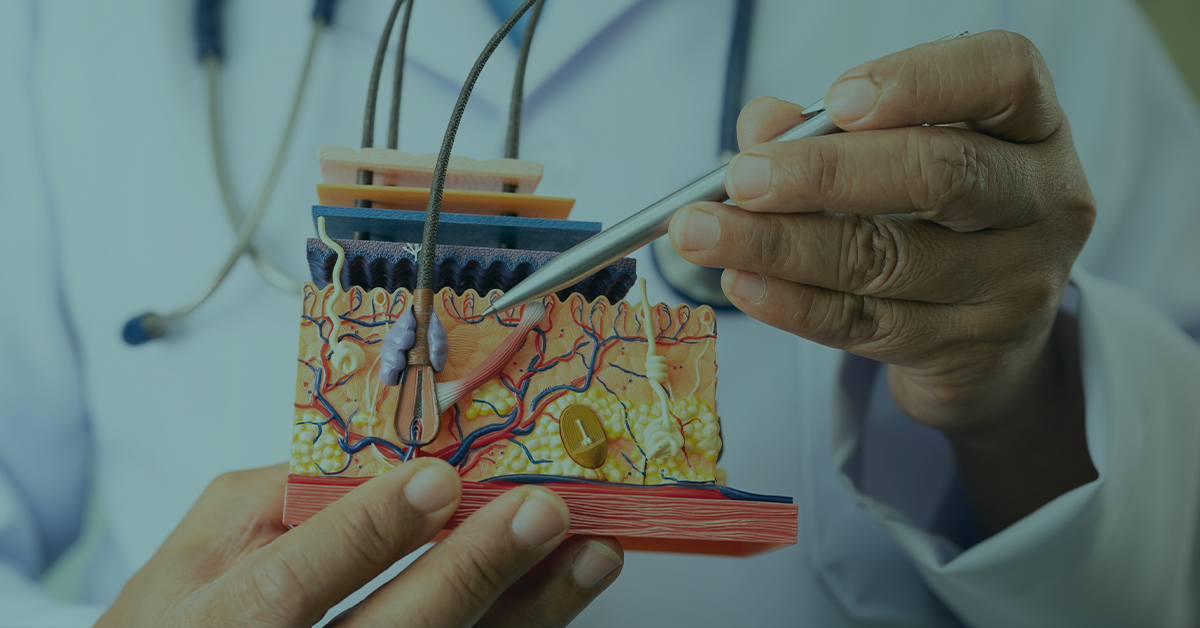
When attempting to understand hair loss, it helps to understand the stages of hair growth. A certain amount of shedding is normal, so instances of hair shedding and hair loss are inextricably entwined with the growth cycle and disruptions to it.
[Read more…]Nothing seems quite as unfair as the idea of losing your hair due to stress, because that in itself is a stressful experience. Understanding how a person’s emotional state can impact the hair’s growth cycle is the first step in managing and hopefully correcting the hair loss.
[Read more…]Dihydrotestosterone (DHT) is a more potent derivative of regular testosterone. This particular derivative is what drives the expression of male physical sex traits – including deepening of the voice and hair growth.
Roughly half the population, no matter their gender, will undergo hair loss at one point or another in their lives. Most of these cases are androgenetic alopecia or related types of hair loss. It is commonly thought that sex hormones such as DHT are one of the largest contributing factors to male pattern hair loss.
[Read more…]Testosterone is a sex hormone that – contrary to common assumption – is found in all genders. In men, which have it in larger amounts, it is produced mostly in the testicles while in women it is produced in the ovaries. It is primarily associated with sex drive and characteristics like muscle mass, body hair, and even the production of red blood cells.
[Read more…]The most common form of hair loss in the United States is age-related hair loss, usually related to genetics. But there is a plethora of illnesses that can also create problems with your hair – some temporary and others permanent. Everything from pregnancy to diabetes to COVID and a lot of things in between impact the way our hair grows and falls out.
[Read more…]When researching hair restoration, you’ve probably heard unfavorable chatter like “hair transplants look fake” or “hair transplants are only for rich, middle-aged men.” Or perhaps you have heard rumors that hair replacement procedures are extremely painful or that recovery from them takes a long time.
There is a plethora of incorrect information circulating about hair transplantation. Much of it is based on an outdated understanding of the process, and some of it is just plain wrong.
[Read more…]Many of us have come to terms with the fact that experiencing some level of hair loss is almost inevitable. Male and female pattern baldness is genetic, and as we age, we are more likely to experience it.
In fact, by the time many men reach the age of 60, they have experienced significant hair loss. That said, we also understand that external factors play a role, including mental health.
Poor mental health can affect us in profound ways in our day-to-day lives and affect our physical health as well. But what is the link between mental health and hair loss?
[Read more…]Androgenic alopecia is a form of hair loss that can occur in both men and women, though commonly called male pattern baldness for men and female pattern hair loss in women. It is characterized by a specific patterning of hair thinning and loss due to genetic and hormonal factors.
[Read more…]Hair loss and hair shedding may sound like (and sometimes look like!) the same thing, but the latter is completely normal. The other might be a sign that you are balding.
For the average person, knowing the difference between normal hair shedding and true hair loss is not just splitting hairs. It is the difference between continuing confidence and the emotional and physical reality of hair loss.
[Read more…]These days there are technological innovations making hair restoration both easier and more natural looking than ever before. Gone are the unsightly hair plus of prior decades, replaced by computer aided transplant tools and advanced methodologies.
At the top of the list are the two most advanced techniques: FUE and FUT.
[Read more…]

